
Modern, comfortable braces without the rubber bands, for a friendlier, quieter, lower-maintenance way to straighten your smile.
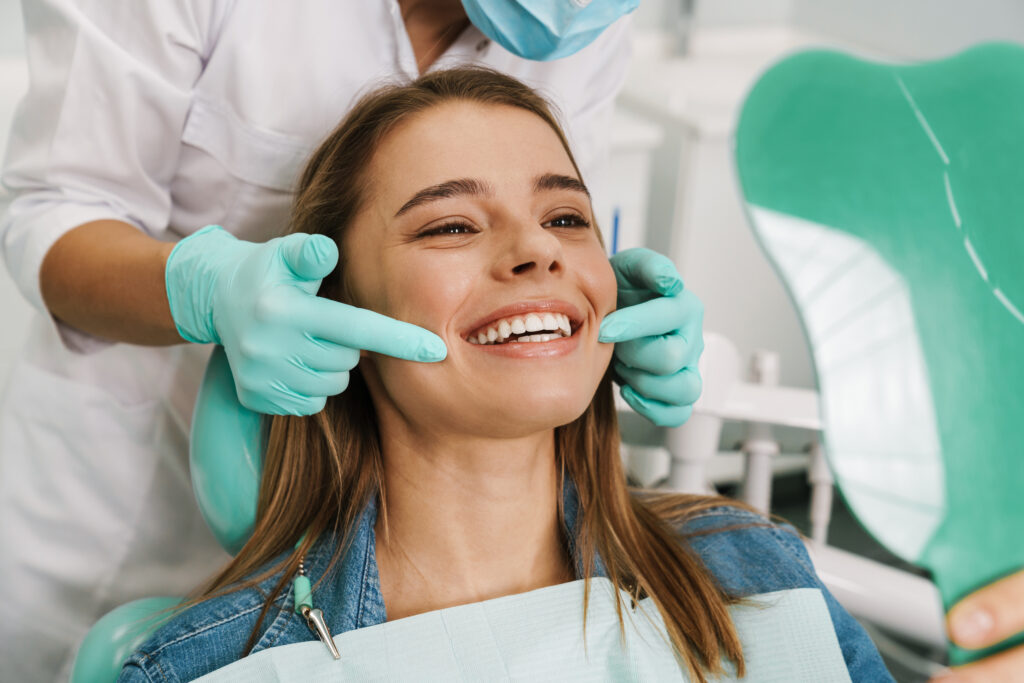
Heard about self-ligating braces and wondering if they’re worth it? You’re not alone.
Patients across the North Country come to us asking:
Self-ligating braces are a newer style of metal braces that don’t use the small rubber bands (called elastic ligatures) that traditional braces rely on. Instead, each bracket has a built-in “door” or clip that holds the wire in place on its own.
The result? Quieter, more comfortable braces with shorter, faster appointments and easier brushing. Same proven technology, better engineering.
At Plattsburgh & Potsdam Orthodontics, we offer both traditional and self-ligating braces, and we’ll help you figure out which is the best fit for your smile and lifestyle, at your free first visit.
Self-ligating braces and traditional braces both work, but for many patients, self-ligating braces offer a few key advantages. Here’s how they compare:
For busy families and adults who want a lower-maintenance braces experience, self-ligating brackets are often the right call.
We’ve designed the self-ligating braces experience to feel calm, friendly, and as low-stress as possible. Here’s how the journey usually goes:
Step 1: A free first visit. Dr. Agnetta takes a friendly look at your smile, takes digital scans and photos, and walks you through which braces option fits best.
Step 2: Placement appointment. The brackets are gently bonded to your teeth and the wire is threaded through, no rubber bands needed. This usually takes about an hour.
Step 3: Quick adjustment visits. Roughly every 8 to 10 weeks, you’ll come in for a short check-in and a possible wire change. Visits are typically faster than traditional braces appointments.
Step 4: A few days of getting used to it. Mild soreness is normal for the first few days, over-the-counter pain relief and softer foods help.
Step 5: Watching your smile take shape. Treatment length varies, but most patients are in self-ligating braces for 12 to 24 months.
Throughout it all, you’ll have a friendly team that’s just a phone call away, happy to answer questions and squeeze you in for quick fixes if anything feels off.

Self-ligating braces are a great fit for many patients, but not everyone. Here’s who typically does best with them:
At your free first visit, we’ll talk through both options in plain language and help you pick what works best for your smile, your schedule, and your budget. Honest guidance, no pressure.
Happy Smiles Across the North Country
One Family-Owned Team Potsdam & Plattsburgh
of Caring Experience Trusted by local families
My daughter has been with this office for the last two years and the staff have always been so kind and caring…
I couldn’t be happier with my experience here! The entire staff is so friendly, welcoming, and genuinely caring—they always make me feel comfortable at every visit…
Friendly staff, excellent orthodontic services, convenient location! We only have great things to say about this team and the experience they provided our teen, from braces through to retainers…
The main difference is in the brackets themselves. Traditional braces use small rubber bands (elastic ligatures) to hold the wire in place on each bracket. Self-ligating braces have a built-in “door” or clip on each bracket that holds the wire, no rubber bands needed. The result is a sleeker look, easier brushing, and often shorter, faster appointments.
In some cases, yes. The built-in clips reduce friction between the wire and bracket, which can allow teeth to move more freely. That said, treatment time depends mostly on your specific smile and how much movement is needed. For most patients, self-ligating treatment takes 12 to 24 months.
Many patients find them more comfortable, especially during adjustments. The lack of elastic ligatures means less friction and less pressure on each tooth. They’re also less likely to irritate cheeks and gums than larger traditional brackets.
Cost varies based on your specific treatment plan. Self-ligating braces are sometimes slightly higher in cost than traditional metal braces due to the bracket technology, but the difference is often modest. We accept most insurance, offer in-house financing, welcome HSA & FSA, and offer a family discount when more than one family member is in treatment. Your first consultation is always free, we’ll walk you through exact pricing in plain language at your visit.
Absolutely. Self-ligating braces are a popular choice for adults because of their sleeker, lower-profile look and easier maintenance. Many of our adult patients prefer them over traditional braces for that reason.
They’re metal braces, so they are visible, but the brackets are typically smaller and lower-profile than traditional braces, making them less noticeable overall. If you’d like an even more discreet option, clear aligners (Angel Aligners) may be a better fit. We’ll help you choose what works best for you at your free first visit.
We’d love to meet your family. Whether you’re just starting to explore your options or ready to take the next step, we’re here to help, with friendly answers, honest guidance, and zero pressure.
Your first visit is always free.
